Affiliate Disclosure: As an Amazon Associate and affiliate partner, we earn from qualifying purchases. Some links in this article are affiliate links. Learn more.
Glycine is one of the most underrated sleep supplements available to men in 2026. While everyone argues about melatonin dosages and magnesium forms, this simple amino acid quietly does something none of them can: it lowers your core body temperature, which is the single most powerful physiological trigger for deep, restorative sleep. Your body produces glycine naturally and you get it from protein-rich foods, but the amounts required for measurable sleep benefits — around 3 grams before bed — are nearly impossible to hit through diet alone. The clinical research is clear, the side effect profile is essentially zero, and the cost is pennies per serving. If you have tried melatonin and hated the grogginess, or magnesium alone is not cutting it, glycine might be the missing piece in your sleep stack.
I started experimenting with glycine about eight months ago after reading a Japanese study that kept showing up in every sleep research rabbit hole I went down. At the time, my sleep was decent — I was already taking magnesium glycinate nightly — but I was still waking up at 4 AM most mornings feeling like my brain had never fully powered down. Not terrible, but not the deep, locked-in sleep I used to get in my twenties. I added 3 grams of glycine powder to warm water about 45 minutes before bed, and honestly, the first night I did not notice much. By the end of the first week, though, something had shifted. I was sleeping through to my alarm for the first time in months. The biggest change was not how fast I fell asleep — it was how I felt in the morning. That heavy, groggy drag where you hit snooze three times was just gone. I woke up clear-headed and ready to move. I have taken it every night since, and it is now a permanent part of my evening routine alongside magnesium.
TL;DR: Glycine is a non-essential amino acid that improves sleep quality by lowering core body temperature and modulating NMDA receptors in the brain. Take 3 grams 30–60 minutes before bed. Research shows it reduces next-day fatigue, improves subjective sleep quality, and enhances daytime cognitive performance — even when total sleep time does not change. It stacks safely with magnesium and has zero dependency risk or morning grogginess. Thorne Glycine is our top overall pick for purity, and BulkSupplements Glycine Powder is the best value for long-term use.
How Glycine Works for Sleep — The Science

Glycine is the smallest and simplest amino acid in the human body. It is classified as non-essential because your body can produce it, but that does not mean you are producing enough for optimal sleep. Glycine improves sleep through two distinct and well-documented mechanisms, and understanding both explains why it works differently from melatonin, magnesium, or any sedative compound.
Mechanism 1: Core Body Temperature Reduction
Your body needs to drop its core temperature by roughly 1–2 degrees Fahrenheit to initiate sleep. This is not a preference — it is a biological requirement. When your core temperature stays elevated, your brain interprets it as a signal to remain alert. Glycine accelerates this cooling process by increasing blood flow to the peripheral tissues (hands, feet, skin surface), which radiates heat away from the core. It does this by acting on NMDA receptors in the suprachiasmatic nucleus (SCN) — the master clock region of the brain that controls circadian rhythm and thermoregulation.
This is the same cooling effect you get from a hot shower before bed: the sudden vasodilation drops core temperature rapidly. Glycine achieves a similar result pharmacologically, without the need to restructure your evening routine around a shower schedule.
Key finding: Bannai et al. (2012), published in Frontiers in Neurology, demonstrated that 3 grams of glycine before bed significantly reduced core body temperature and sleep onset latency in human subjects. The researchers confirmed that glycine acts on peripheral vasodilation mediated by NMDA receptors in the SCN, providing a clear mechanistic explanation for its sleep-promoting effects.
Mechanism 2: NMDA Receptor Modulation and Calming Effects
Glycine is an inhibitory neurotransmitter in the central nervous system. It binds to glycine receptors in the brainstem and spinal cord, producing a calming effect that reduces neural excitability. It also acts as a co-agonist at NMDA receptors in the brain, modulating glutamate activity. While glutamate is excitatory, glycine’s role at these receptors is regulatory — it helps maintain balanced neural signaling rather than simply sedating you. This is an important distinction: glycine does not knock you out like a sleeping pill. It creates the neurochemical conditions for natural sleep onset.
Key finding: Yamadera et al. (2007), published in Sleep and Biological Rhythms, found that 3 grams of glycine taken before bedtime significantly improved subjective sleep quality, reduced daytime sleepiness, and improved performance on memory recognition tasks the following day. Notably, these improvements occurred without any increase in total sleep time — meaning glycine improved the quality of sleep, not just the quantity.
Why This Matters for Men Specifically
Men tend to run hotter than women due to higher metabolic rates and greater muscle mass, both of which generate more heat. This makes the thermoregulatory barrier to sleep more significant for men, particularly those who train hard. If you have ever noticed that you sleep worse on heavy leg days or after intense evening workouts, elevated core temperature from exercise-induced thermogenesis is likely a factor. Glycine directly addresses this by accelerating the cooling process that your body needs to initiate deep sleep.
Additionally, glycine plays a role in collagen synthesis and serves as a precursor to glutathione, the body’s master antioxidant. For men who train, this means glycine supplementation supports sleep and recovery simultaneously — a dual benefit that most sleep supplements cannot claim. It also supports gut lining integrity, which ties into the broader health benefits we cover in our collagen supplements guide.
Want a Complete Sleep Support Formula?
Renew combines glycine with multiple sleep-enhancing nutrients — magnesium, L-theanine, ashwagandha, and 5-HTP — in one nightly formula designed for deep, restorative sleep.
Our Top Glycine Supplement Picks (2026)
Glycine is one of the simplest supplements on the market — it is a single amino acid, so the differentiators between brands come down to purity, form factor (capsule vs. powder), third-party testing, and price per serving. We evaluated over a dozen glycine products and narrowed it to five that offer the best combination of quality and value for men using glycine specifically for sleep.
Best Overall — Pharmaceutical-Grade Purity
Thorne is the gold standard in supplement manufacturing, and their glycine is no exception. Each capsule delivers 1 gram of pharmaceutical-grade glycine with no fillers, binders, or unnecessary additives. Thorne manufactures in NSF-certified facilities and conducts four rounds of testing on every product — raw materials, in-process, finished product, and stability testing. For men who want absolute confidence in what they are putting in their body, Thorne eliminates all guesswork.
The capsule format means you take three capsules to hit the clinically studied 3-gram dose. Some men prefer this over powder because there is no measuring, no mixing, and no taste to deal with. You pop three capsules with a small glass of water 30–45 minutes before bed and you are done. The downside is cost — Thorne commands a premium for their testing protocols and manufacturing standards, making this the most expensive option on our list per serving. But for men who already trust Thorne for their creatine, magnesium, or multivitamin, adding glycine from the same brand keeps your stack consistent.
Pros
- Pharmaceutical-grade purity
- NSF-certified facility
- Four rounds of independent testing
- No fillers or artificial ingredients
- Trusted by 100+ professional sports teams
Cons
- Most expensive per serving
- Need 3 capsules for clinical 3g dose
- Capsules only — no powder option
Best Value Capsule — Affordable Quality
NOW Foods has been manufacturing supplements since 1968, and their glycine capsules deliver the clinical dose at a fraction of Thorne’s price. Each capsule provides 1000mg of free-form glycine, so three capsules before bed gets you to the research-backed 3-gram dose. NOW is GMP-certified and conducts independent third-party testing, which puts them well above generic brands in terms of quality assurance without the premium pricing of pharmaceutical-grade companies.
The 100-capsule bottle gives you roughly 33 servings at the 3-capsule dose, which works out to about a month of nightly use. For men who want the convenience of capsules but do not want to pay Thorne prices, NOW is the sweet spot between quality and affordability. The capsules are vegetarian-friendly (hypromellose shells), and the formula contains no major allergens. If you are already using NOW products for other supplements in your stack, this keeps things simple and consistent.
Pros
- Excellent price per serving
- GMP-certified manufacturing
- Third-party tested
- Vegetarian capsules
- Established brand since 1968
Cons
- Still need 3 capsules for clinical dose
- Not NSF-certified (GMP only)
- 100-count bottle only lasts ~33 days
Best Overall Value — Lowest Cost Per Serving
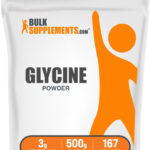
If you are looking for the most glycine for the least money, BulkSupplements wins by a wide margin. Their glycine powder comes in bulk bags ranging from 100 grams to 1 kilogram, and at the 1kg size, you are looking at over 300 servings for roughly the price of two bottles of Thorne capsules. The powder is pure glycine with no fillers, flavors, or additives — just the amino acid in its free-form state. BulkSupplements tests every batch through independent third-party labs for purity and potency.
The powder format is actually an advantage for glycine specifically because glycine has a naturally sweet taste. It dissolves easily in warm water and tastes mildly sweet on its own — no need to mask it in a smoothie or fight through a bitter aftertaste. I personally mix 3 grams in about 4 ounces of warm water before bed, and it tastes like slightly sweetened water. For men who already measure creatine or other powders, adding glycine to the evening routine takes about 10 seconds. The only real downside is that you need a small scale or measuring spoon, and the resealable bag is less elegant than a branded bottle on your nightstand.
Pros
- Lowest cost per serving by far
- Pure glycine, no additives
- Third-party lab tested
- Naturally sweet taste
- Dissolves easily in warm water
- Available in bulk sizes up to 1kg
Cons
- Requires measuring (scale or scoop)
- Resealable bag, not a bottle
- No NSF or GMP certification displayed
Best Budget Powder — Clean and Simple
Nutricost competes directly with BulkSupplements on price and takes a nearly identical approach: pure glycine powder, no fillers, third-party tested, available in multiple sizes. Where Nutricost edges ahead for some men is packaging and labeling — their containers are proper bottles with screw-top lids rather than resealable bags, and the label clearly states serving size and number of servings, making daily use slightly more convenient.
The 500-gram container delivers about 166 servings at the 3-gram dose, which is over five months of nightly use for roughly the price of a single dinner out. Nutricost is GMP-compliant and uses independent third-party testing. The powder dissolves well in water and shares glycine’s characteristic mild sweetness. For men who want a budget-friendly powder in a more organized package than BulkSupplements, Nutricost is the better choice. The taste and efficacy are functionally identical — the difference is entirely in presentation and convenience.
Pros
- Very affordable per serving
- Proper bottle with screw-top lid
- GMP-compliant facility
- Third-party tested
- 166 servings per 500g container
Cons
- Still requires measuring
- Less brand recognition than Thorne or NOW
- No NSF certification
Best for Stacking — Research-Driven Brand
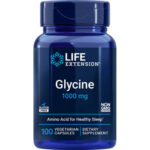
Life Extension is a research-first supplement company that has been publishing peer-reviewed studies and funding clinical trials for over 40 years. Their glycine capsules deliver 1000mg per capsule with excipient-grade purity, and the brand’s commitment to science-based formulation makes them a natural fit for men who take a systematic approach to supplementation. Life Extension products undergo rigorous testing for identity, potency, and purity, and the company publishes detailed certificates of analysis.
What makes Life Extension glycine particularly well-suited for stacking is that the brand offers a complete lineup of sleep-supporting supplements — L-theanine, melatonin IR/XR, enhanced sleep formulas — all manufactured to the same standards. If you are building a complete sleep stack from a single trusted source, Life Extension lets you do that without mixing brands. Take three capsules (3g total) 30–60 minutes before bed. The capsules are easy to swallow and can be taken alongside your magnesium and other evening supplements without issue.
Pros
- Research-driven brand with 40+ year track record
- Rigorous third-party testing
- Excellent for building a complete sleep stack
- Certificate of analysis available
- Compatible with other Life Extension sleep products
Cons
- Mid-range pricing
- 3 capsules needed for clinical dose
- Capsules only
Dosage and Timing: How to Take Glycine for Sleep
The clinical evidence on glycine for sleep is remarkably consistent on dosing, which makes this one of the simpler supplements to use correctly.
The Effective Dose
3 grams (3,000mg) before bed. This is the dose used in every major glycine-sleep study, including Bannai et al. (2012) and Yamadera et al. (2007). There is no evidence that higher doses produce better sleep results, and there is no established benefit to taking less than 3 grams for sleep specifically. Unlike melatonin, where micro-dosing at 0.3–0.5mg can be effective, glycine needs to hit the 3-gram threshold to reliably lower core body temperature and produce measurable improvements in sleep quality.
When to Take It
Take glycine 30–60 minutes before your target bedtime. The thermoregulatory effects take approximately 30 minutes to begin, and the calming neurotransmitter effects build over a similar timeframe. Taking it too early (2+ hours before bed) means the peak effect may pass before you actually lie down. Taking it right as you get into bed means you are waiting for it to kick in while staring at the ceiling.
The sweet spot for most men: take glycine at the same time you take your magnesium supplement, about 45–60 minutes before lights-out. This creates a simple, repeatable evening routine that stacks two complementary sleep mechanisms — glycine for temperature regulation and magnesium for nervous system calming.
Powder vs. Capsules
Powder is the most practical format for glycine. At 3 grams per dose, you would need three 1000mg capsules, which is not terrible but adds up in pill count if you are already taking magnesium, vitamin D, fish oil, and other supplements. Glycine powder dissolves easily in warm water and has a mildly sweet, pleasant taste — it is one of the few supplement powders that actually tastes good on its own. A small glass of warm, slightly sweet water before bed can even become a calming ritual in itself.
Capsules are better for men who travel frequently, dislike measuring powders, or simply prefer the convenience of grab-and-go dosing. The cost per serving is higher, but the compliance factor matters — a supplement you actually take every night beats a cheaper one that sits in your cabinet because you cannot be bothered to measure it.
Can You Take Too Much Glycine?
Glycine has an excellent safety profile. Doses up to 9 grams per day have been used in clinical research without significant adverse effects. At the standard 3-gram sleep dose, side effects are extremely rare. Some people report mild gastrointestinal softening at higher doses (above 5 grams), but this is uncommon. Glycine does not cause dependency, tolerance, rebound insomnia, or morning grogginess — which makes it one of the safest long-term sleep supplements available.
Glycine Supplement Comparison Table
| Product | Form | Glycine Per Serving | Servings (at 3g) | Testing | Best For |
|---|---|---|---|---|---|
| Thorne Glycine | Capsule (1g each) | 3g (3 caps) | ~60 | NSF Certified | Purity & trust |
| NOW Glycine 1000mg | Capsule (1g each) | 3g (3 caps) | ~33 | GMP + 3rd party | Value capsule |
| BulkSupplements Glycine | Powder | 3g (1 scoop) | ~333 (1kg bag) | 3rd party lab | Best price per serving |
| Nutricost Glycine | Powder | 3g (1 scoop) | ~166 (500g) | GMP + 3rd party | Budget powder |
| Life Extension Glycine | Capsule (1g each) | 3g (3 caps) | ~33 | CoA available | Stacking with LE products |
Glycine vs Other Sleep Supplements — How It Compares
If you have read our complete sleep supplements guide, you know there are several effective options. Here is how glycine stacks up against the most popular alternatives, and when to choose one over the other.
Glycine vs Magnesium
These two are not competitors — they are ideal partners. Magnesium works primarily through GABA receptor activation and muscle relaxation, while glycine works through thermoregulation and inhibitory neurotransmission. They target completely different sleep pathways, which is why combining 3g glycine with 300–400mg magnesium glycinate is one of the most effective non-prescription sleep stacks available. Interestingly, magnesium glycinate already contains some glycine as the chelating agent, but the amount is insufficient to produce standalone glycine sleep benefits — hence the value of supplementing glycine separately.
Glycine vs Melatonin
Melatonin is a circadian rhythm signaler — it tells your brain that it is nighttime and time to initiate sleep. Glycine is a thermoregulator and calming agent — it creates the physical conditions for sleep. Melatonin is most useful for jet lag, shift work, and delayed sleep phase issues. Glycine is most useful for improving sleep quality, reducing next-day fatigue, and helping men who run hot at night. Melatonin carries some risk of dependency and morning grogginess at higher doses; glycine carries neither. For men who wake up feeling groggy even after a full night’s sleep, glycine is the better first choice.
Glycine vs L-Theanine
L-theanine promotes alpha brain wave activity and reduces mental chatter — it is the “quiet your racing mind” supplement. Glycine is more physical in its mechanism, working through temperature and neurotransmitter pathways. Men who lie awake because their brain will not stop running typically benefit more from L-theanine. Men who lie awake because they feel physically wired or overheated benefit more from glycine. Again, these stack well together with no interaction concerns.
| Factor | Glycine | Magnesium | Melatonin | L-Theanine |
|---|---|---|---|---|
| Primary mechanism | Core temp reduction | GABA & muscle relaxation | Circadian signaling | Alpha wave promotion |
| Best for | Sleep quality & next-day alertness | Physical tension, deficiency | Jet lag, schedule shifts | Racing mind, anxiety |
| Dose | 3g | 300–400mg | 0.5–3mg | 200–400mg |
| Dependency risk | None | None | Low (at high doses) | None |
| Morning grogginess | No | No | Possible | No |
| Stacks with glycine? | — | Excellent | Good | Excellent |
The combination that has worked best for me personally is 3 grams glycine + 300mg magnesium glycinate + 200mg L-theanine, all taken about 45 minutes before bed with a glass of warm water. I have tried adding low-dose melatonin to this stack and honestly did not notice any additional benefit — the glycine and magnesium together seem to handle both the physical and neurological sides of sleep initiation thoroughly enough that melatonin becomes redundant. Your mileage may vary, especially if you deal with shift work or jet lag where melatonin’s circadian resetting effect is uniquely valuable. But for a regular guy with a consistent schedule who just wants better sleep quality and sharper mornings, the glycine-magnesium-theanine trio is hard to beat.
Additional Benefits of Glycine Beyond Sleep
While this article focuses on glycine for sleep, it is worth noting the broader benefits that make this amino acid a particularly smart addition to a man’s supplement stack.
- Collagen synthesis: Glycine is one of the three primary amino acids in collagen (along with proline and hydroxyproline). Supplementing glycine supports joint health, tendon integrity, and skin elasticity. For men who also take collagen supplements, additional glycine provides the building blocks your body needs to actually use that collagen.
- Glutathione production: Glycine is a precursor to glutathione, the body’s most important antioxidant. Glutathione protects cells from oxidative stress, supports liver detoxification, and plays a role in immune function. A 2023 study in The Journal of Nutrition found that glycine and N-acetylcysteine supplementation together increased glutathione levels significantly in older adults.
- Muscle preservation: Glycine has anti-inflammatory properties that may help reduce exercise-induced muscle damage. For men who train hard, this means glycine supports recovery both directly (through anti-inflammatory action) and indirectly (through improved sleep quality).
- Gut health: Glycine supports the integrity of the intestinal mucosal lining, which is relevant for men dealing with digestive issues or food sensitivities. A healthy gut lining improves nutrient absorption from all your other supplements and whole foods.
Looking for an All-in-One Deep Sleep Solution?
Renew is a ClickBank top seller that combines glycine, magnesium, ashwagandha, 5-HTP, L-theanine, and melatonin into a single nightly capsule — designed specifically for deep, restorative sleep and next-morning energy.
Frequently Asked Questions
Is glycine safe to take every night long-term?
Yes. Glycine is a naturally occurring amino acid that your body produces and metabolizes every day. Unlike melatonin, which can suppress endogenous production at high doses, glycine does not create dependency, tolerance, or rebound effects. Clinical studies have used 3–9 grams daily without significant adverse effects. It is one of the safest sleep supplements available for long-term nightly use. That said, if you are on prescription medications, especially anti-psychotics like clozapine (which also acts on glycine receptors), consult your doctor before starting supplementation.
Can I take glycine with magnesium glycinate at the same time?
Absolutely — this is actually one of the best sleep supplement combinations available. Magnesium glycinate already contains glycine as its chelating agent, and adding standalone glycine on top of it compounds the sleep benefits through complementary mechanisms. The magnesium works on GABA receptors and muscle relaxation, while the additional glycine enhances thermoregulation. Take both together 30–60 minutes before bed. There are no interaction concerns between the two.
Why does glycine taste sweet if it is an amino acid?
Glycine is named after the Greek word glykys, meaning sweet. Its molecular structure interacts with sweet taste receptors on the tongue, giving it a naturally mild sweetness without any sugar or artificial sweeteners. This is actually one of its practical advantages as a supplement — the powder dissolves easily in warm water and is pleasant to drink on its own, unlike most amino acids that taste bitter or astringent. The sweetness is mild, roughly comparable to a low-sugar herbal tea.
How long does it take for glycine to improve sleep?
Most men notice a difference within the first 3–7 nights of consistent use. The thermoregulatory effect (core temperature drop) works on the first night, so some people report improvement immediately. However, the subjective sense of waking up more refreshed and less fatigued tends to become more pronounced after a few days of cumulative use. The Yamadera et al. study measured significant improvements in subjective sleep quality and next-day fatigue after just three days of glycine supplementation. Give it at least one full week before evaluating results.
Is glycine better than melatonin for sleep?
They solve different problems. Glycine is better for improving overall sleep quality and next-morning alertness without any risk of grogginess or dependency. Melatonin is better for fixing timing issues — jet lag, delayed sleep phase, shift work. For most men with a regular schedule who just want deeper, more restorative sleep and clearer mornings, glycine is the superior choice. For men dealing with circadian disruption, melatonin is more targeted. Ideally, use glycine nightly for baseline sleep quality and keep low-dose melatonin (0.5–1mg) on hand for schedule disruptions.